Crypto Ledger Desktop: Full-Feature Wallet Management on PC
Crypto Ledger Desktop app for Windows, macOS, and Linux. Manage crypto portfolios, install blockchain apps, and secure assets with your hardware wallet.
Crypto Ledger Desktop delivers the complete hardware wallet management experience on Windows, macOS, and Linux computers. The desktop version of the application provides the full range of features available in the Crypto Ledger ecosystem, including portfolio management, transaction execution, staking, swaps, and direct connection to decentralized applications through the Ledger Connect browser extension.
Desktop usage remains the preferred method for most hardware wallet owners due to larger screen real estate, USB-C connectivity for all device models, and access to advanced account management tools. This page covers installation, platform-specific considerations, and optimization of the Crypto Ledger desktop app for daily use.
Using Crypto Ledger on Desktop Devices
Crypto Ledger desktop operates as a standalone application that communicates with Ledger hardware wallets through USB-C connections and, where supported, Bluetooth. The desktop environment offers several advantages over the mobile counterpart, including support for the Ledger Nano S Plus via direct USB connection, simultaneous management of multiple accounts across different blockchain networks, and faster synchronization of transaction histories.
The application stores encrypted account metadata locally on the computer, which enables faster startup times and offline portfolio viewing. Private keys, however, remain exclusively on the hardware wallet. The desktop app acts as a read-only interface that constructs transactions for the hardware wallet to sign. This separation of concerns forms the foundation of Ledger cold storage security.
Crypto Ledger for Windows and macOS
Crypto Ledger desktop Windows installation requires a 64-bit system running Windows 10 or later. The installer is available as an .exe file from the official download page. Windows Defender may prompt a SmartScreen warning on first launch because the application is not distributed through the Microsoft Store; this is expected behavior and can be bypassed by selecting Run Anyway.
Crypto Ledger desktop mac users need macOS 12 Monterey or later. The application ships as a .dmg disk image. On Apple Silicon Macs (M1, M2, M3, M4), the app runs natively without Rosetta 2 translation, resulting in faster performance and lower power consumption. macOS Gatekeeper may require the user to approve the application in System Settings under Privacy and Security before the first launch.
Linux support covers Ubuntu 20.04 and later distributions as an AppImage. Users must install udev rules to allow USB communication with the hardware wallet. Ledger provides a dedicated script that automates this configuration step.
Desktop-Exclusive Features and Capabilities
Crypto Ledger desktop app provides several capabilities that are either exclusive to or optimized for the desktop environment. These features leverage the processing power and display size of personal computers to deliver enhanced functionality:
- Manager mode for installing and uninstalling blockchain apps directly on the hardware wallet, with visual storage capacity indicators showing available space on the secure element.
- Advanced account management supporting multiple accounts per cryptocurrency, custom account naming, and batch operations for organizing large portfolios.
- Firmware update functionality for the hardware wallet, which requires a stable USB connection and is not available on mobile platforms.
- Export of transaction history in CSV format for tax reporting and portfolio analysis in third-party tools such as Koinly, CoinTracker, and CryptoTaxCalculator.
- Ledger Connect extension integration for secure interaction with Web3 applications in Chrome and Brave browsers while maintaining hardware wallet signing.
Portfolio Dashboard and Analytics
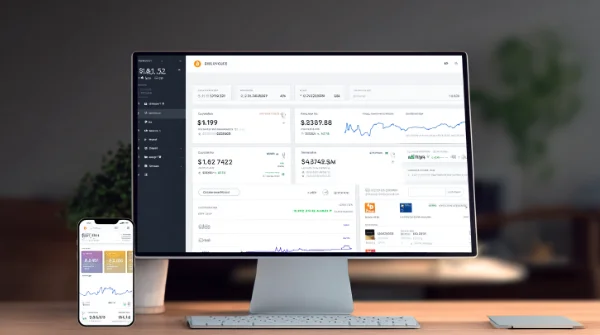
Crypto Ledger desktop app portfolio dashboard presents aggregate valuations across all connected accounts in a single view. The interface displays 24-hour, 7-day, and 30-day performance metrics, allocation breakdowns by asset, and individual account balances. Historical charts track portfolio value over custom date ranges, and the allocation view identifies concentration risk across different blockchain networks. These analytics tools help users make informed decisions about rebalancing, staking, and new asset acquisitions.
Installing Crypto Ledger Desktop App on Your PC
Crypto Ledger desktop app installation follows a consistent process across platforms. The numbered steps below cover the complete workflow:
- Visit ledger.com/ledger-live/download and allow the page to detect the operating system. The correct download button will appear automatically.
- Download the installer file: .exe for Windows, .dmg for macOS, or .AppImage for Linux. File sizes range from 150 MB to 200 MB.
- Run the installer. On Windows, approve the SmartScreen prompt. On macOS, open the .dmg and drag the application to the Applications folder. On Linux, set executable permissions on the AppImage file.
- Launch the application and accept the terms of service. The app will check for updates and download the latest version if necessary.
- Connect the Ledger hardware wallet via USB-C cable. The app will recognize the device and prompt for PIN entry on the hardware wallet screen.
- Complete the genuine check to verify the hardware wallet has not been tampered with. The app communicates with Ledger servers to confirm device authenticity.
For initial setup instructions after installation, see the Crypto Ledger Setup Guide. For mobile installation, visit our Crypto Ledger Mobile App page.
Crypto Ledger Desktop Performance and Troubleshooting
Crypto Ledger desktop pc performance depends on system resources and network connectivity. The table below outlines common issues and their resolutions:
| Issue | Likely Cause | Solution |
|---|---|---|
| Device not detected | Missing USB drivers or udev rules | Reinstall USB drivers; run Ledger udev script on Linux |
| Sync stuck or slow | Network congestion or firewall blocking | Check internet connection; whitelist Ledger domains in firewall |
| App crashes on launch | Corrupted installation or outdated OS | Reinstall the application; update OS to minimum supported version |
| Firmware update fails | USB cable issue or low battery | Use a high-quality USB-C cable; charge Nano X/Stax before updating |
| Transaction pending indefinitely | Low network fee selected | Wait for confirmation or use Replace-by-Fee (RBF) on Bitcoin transactions |
If persistent issues remain unresolved, users can contact support through the official Ledger support portal. For information on download safety practices, see our Crypto Ledger Download Safety page.
Frequently Asked Questions
-
An internet connection is needed for synchronizing balances, broadcasting transactions, and checking for updates. Offline, the application displays the last cached portfolio data but cannot process new transactions.
-
Chromebooks do not natively support the Crypto Ledger desktop application. Users with Chrome OS can access limited functionality through the Android version if their Chromebook supports Android apps and has Bluetooth for Nano X or Stax connections.
-
The installed application occupies approximately 300 to 500 MB of disk space. Account data and cached blockchain information may add another 50 to 200 MB depending on the number of accounts and transaction history.
-
Ledger does not offer a web-based version of Crypto Ledger. Any website claiming to provide Crypto Ledger in a browser is likely a phishing attempt. The application is available only as a downloadable desktop or mobile app.
-
Yes. A single Crypto Ledger desktop installation can manage multiple Ledger devices. Each device appears as a separate entity, and users can switch between devices by disconnecting one and connecting another. Accounts from all devices appear in the unified portfolio view.
-
No. The application is compatible exclusively with Ledger hardware wallets including the Nano S Plus, Nano X, Stax, and Flex. Trezor and KeepKey users need their respective companion applications.